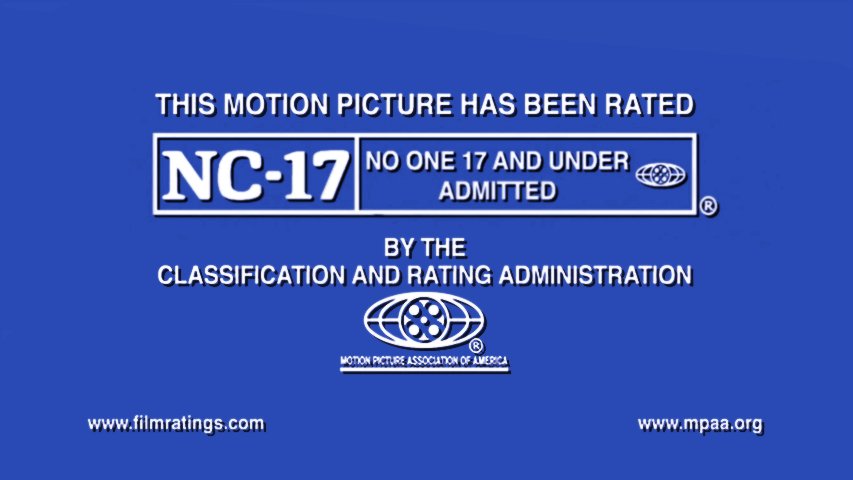
The stigma around the rating isn’t entirely the MPA’s fault. Much of it is held over from the X rating. Originally an X meant that the film featured adult context that may be too mature for younger audiences. When the rating symbol was created in the late 1960s the MPA didn’t trademark it. Due to that lack of trademark, the fledgling pornographic film industry the early 70s would often self-rate their films with an X. It became a marketable letter for a certain kind of film and thus became synonymous with that.
So, the X rating was stigmatized, and studios wanted a different rating, so in 1990 NC-17 was introduced to fix that issue. It failed. Again, not entirely because of the MPA. Most newspapers and television stations would not run ads for such films and most multiplex cinemas would not show them. Blockbuster video and other rental chains would not carry copies when they arrived on home video. Abel Ferrara’s Bad Lieutenant was edited down to an R for those rental chains. Ironically, about a decade later, these chains would however carry “Unrated” cuts of films that were edited down for the cinemas. It was like the rating itself, less the content, was the issue.
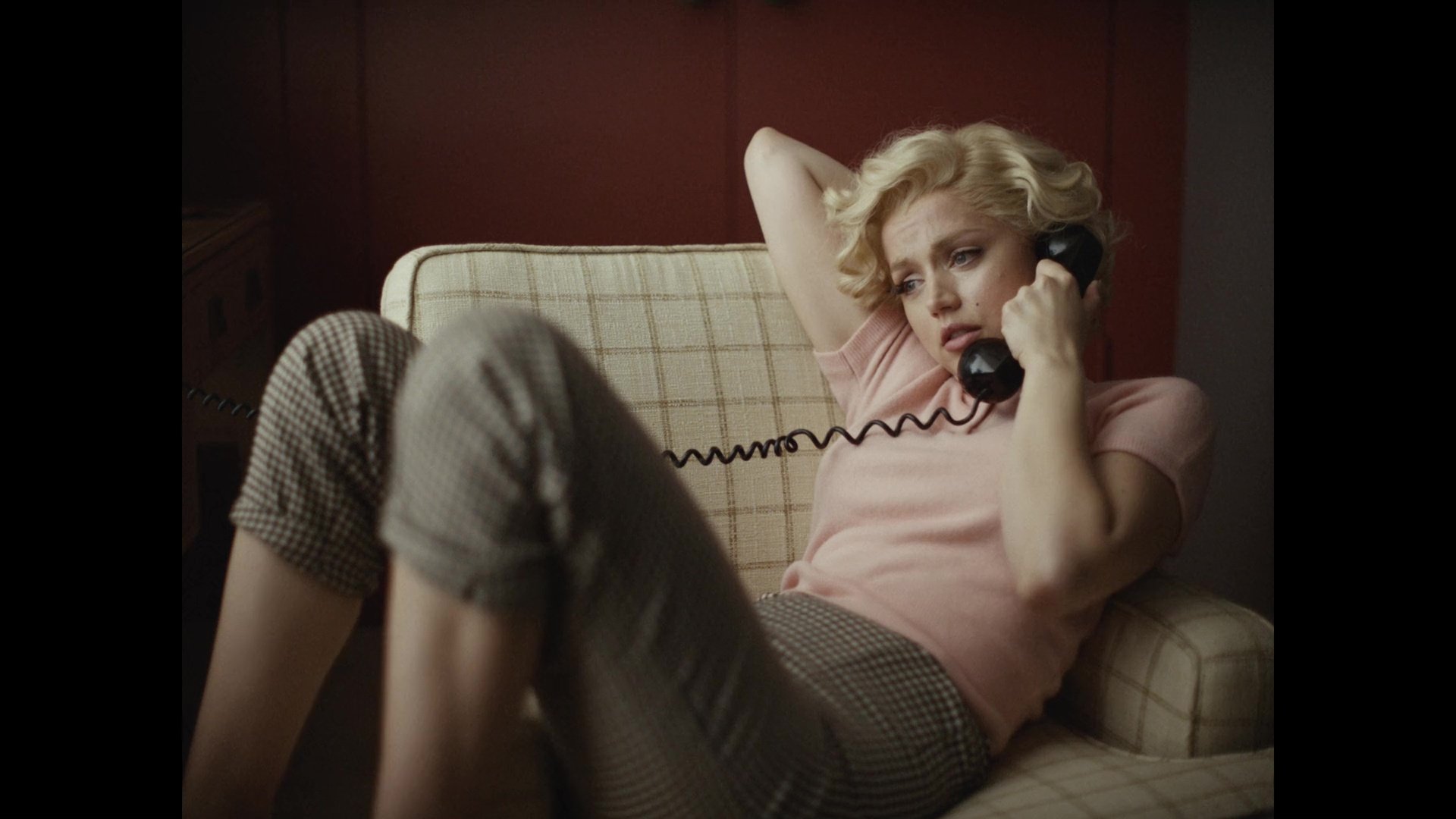
With Blonde it is easy to wonder if this decision by Netflix to keep the rating may actually be a bit of a marketing ploy. The streamer is both a film and television studio, so it could have easily released Blonde as a television film with a TV-MA rating. The fact that a more-or-less equivalent television rating is less stigmatized than a film rating could have its own article. Perhaps for Netflix a near 3-hour arty pseudo-biopic is hard to market. Keeping the rating adds to the buzz.
It is somewhat surprising that with the rise of streaming there was not an effort to rebrand the rating. Showgirls, an infamous NC-17 bomb, had a whole new life once it hit home video. Audiences may not be willing to buy the ticket in a public space, but they are often willing to watch in a private space. Which is exactly what streamers have to offer. It could also bring in a demographic that is actually quite large: adults wanting to watch adult oriented films. Not necessarily explicit sex and violence, but films that cater to adult themes. No offense to the teenage audience, but not everything has to be for them. Perhaps adults would get more interested in cinema again. It would open up an avenue that streamers have avoided. They could get more creative and feature more original films without the concern of the MPA. John Waters in This Filthy World challenges indie filmmakers to try and find a way to get an NC-17 without any sex or violence. Imagine the water-cooler factor of that. Free idea: a horror film called Sunday Scaries about the very adult problem of working in late-stage capitalism. No sex, drugs, or violence. Just dread and anxiety for 90 minutes.
With Blonde easily streaming at home, now is a great time to explore the “genre” of NC-17 films. Bad Lieutenant is quite good. Showgirls is essential, being the only wide-released NC-17 film, but its cult following is not due to quality. For a campy NC-17 experience, I would instead go with John Waters’ A Dirty Shame. Not his best, but at least it is funny on purpose. Many of the 1990s titles are, as expected, of their time. Another essential title, Henry & June, the first to get the rating, has a stuffiness that can also be found in Wide Sargasso Sea and Bent. Blonde has a different kind of stuffiness, more of an arthouse variety. Man Bites Dog has less of that, and is quite disturbing. David Cronenberg’s Crash might be even more disturbing with is auto, as in car, eroticism. It makes sense in the film. Say what you will about Canada’s Great Dave. His images might be gratuitous at times, but sex always moves the plot forward in his films and Crash is a great example.
The 21st century would give us Blue is the Warmest Color and The Dreamers. The former is one of the better NC-17 films, but the behind-the-scenes context taints its legacy. In a rare move, the Cannes committee that year award the Palme d’Or to the director and the two leads. The two leads deserve it more. Bertolucci’s The Dreamers has a similar stuffiness as Last Tango in Paris, but is kind of a film lover’s movie. Blonde shares that film lover’s sentiment too. Steve McQueen’s Shame, is a fascinating look at addiction that might pair well with Dominick’s Monroe meditation. Ang Lee’s Lust, Caution and Pedro Almodovar’s Bad Education are probably the best films to receive the rating. Both are excellent dramas worth your time. Lee’s film is the highest-grossing NC-17 film. Time will see how Blonde will settle among these titles. I am unsure if it really goes into NC-17 territory, there are teen sex comedies that got away with more, but Blonde does share a kind of intensity that Bad Lieutenant, Crash, and Man Bites Dog have. It is not as explicit as those films, but it gets under your skin just as deep. Perhaps the rating has more baggage than it deserves. I can say that every film I’ve seen with an NC-17, is far from ordinary.
~Andrew