2026 ‧ Camp-Comedy/Meta-Horror/Slasher‧ 112m
Jane Schoenbrun’s third feature continues their interest in how media affects the viewer. Their previous two films, I Saw the TV Glow and We’re All Going to the World’s Fair, examined television and the internet respectively. Teenage Sex and Death at Camp Miasma considers the slasher franchise.
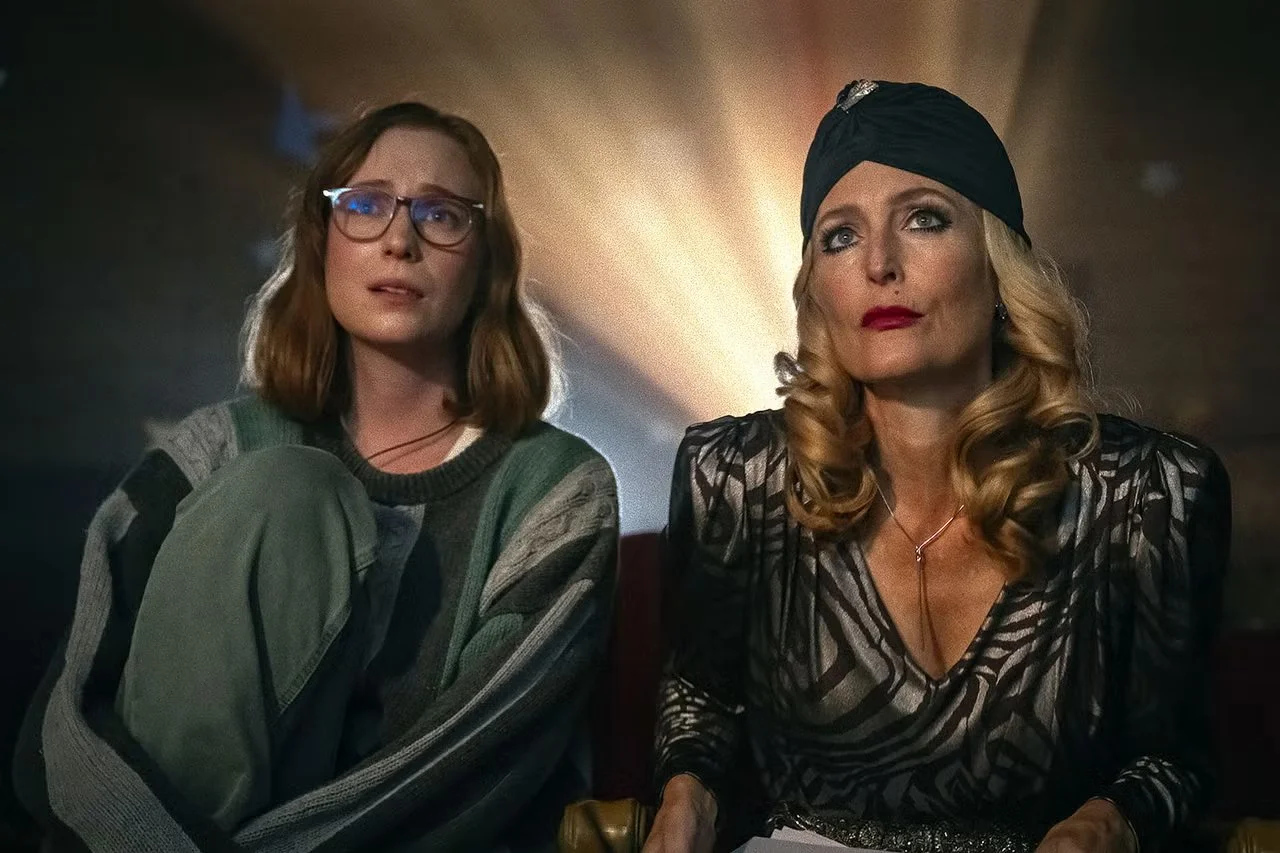
Kris Williams, played by Hannah Einbinder, is a young director working with a studio to reboot the prolific slasher franchise Camp Miasma. She travels to the summer camp where the original was filmed. The camp is owned by the film’s final girl Billy Presley, Gillian Anderson. The two quickly form a bond over a dinner of KFC. Their relationship blossoms, and we are treated to a lengthy showing of the original/imagined reboot. All the while, there seems to be something in the bottom of the camp’s frozen lake. Little Death, the slasher franchise’s villain, wants a new franchise entry.
Einbinder and Anderson co-lead this film with remarkable chemistry. Their relationship has echoes of Portrait of a Lady on Fire and Persona, while still being quite unique. The meta-casting of Jasmin Savoy Brown and Patrick Fischler add to the film’s cheekiness about fan-service. Every aspect of the film, be it the oil paint textured backgrounds, the anachronisms, or ironic song choices is a deliberate and needed choice for the story. Another important choice, quite in keeping with many 80s slashers, Teenage Sex and Death at Camp Miasma is more gory than it is scary.
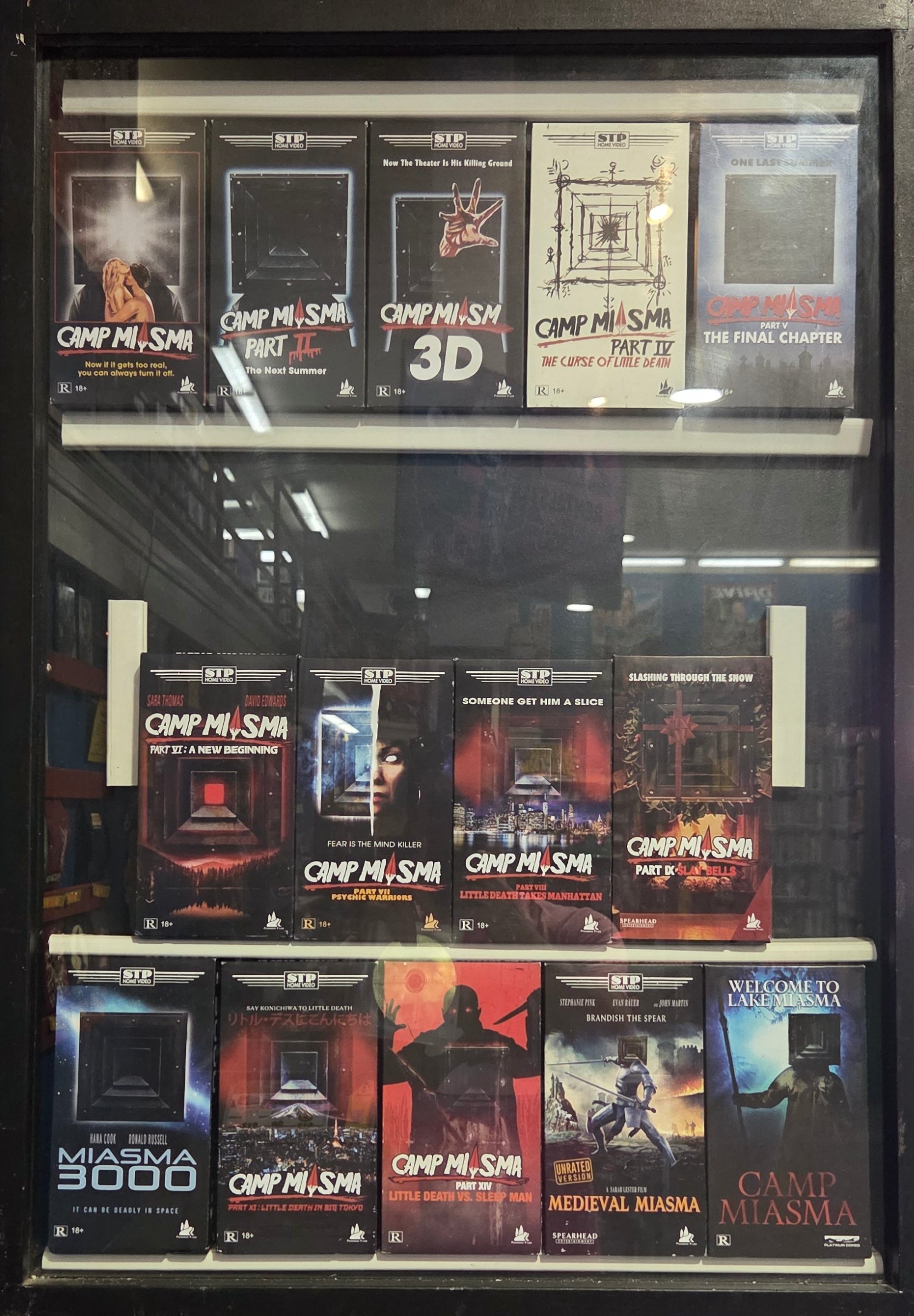
Scarecrow Video’s display of Camp Miasma VHS tapes. Several Friday the 13th VHS covers are emulated/spoofed. Photo: Andrew
As with Schoenbrun’s other films, this proudly (and often literally) calls out its influences. Sunset Blvd. gets shout-out, as does “fright master” Wes Craven’s New Nightmare. David Lynch, or at the very least Twin Peaks: The Return, was an obvious influence on I Saw the TV Glow. Here Schoenbrun seems to be channeling a different Midnight Movie auteur, John Waters. Camp, in both senses of the word, is front and center here. The Camp Miasma franchise seems to be mostly Friday the 13th with a few other slashers peppered in. A certain plot point from the original Sleepaway Camp is an essential ingredient. It is easy to see that Schoenbrun has some issues with the problematic aspects of slashers, but still absolutely loves them. This dialectic is also explored in the particulars of Kris and Billy’s relationship.
The additional subtext of that genre, behind the scenes stories, fan reactions, legacies, etc are thrown into the mix to create a deeper world. Somehow Schoenbrun creates a meta-commentary on meta-commentary horror as well as a spoof of elevated horror while still being elevated. Even with the dense subject matter, the films humor helps make this Schoenbrun’s most accessible film. This is no small feat. However, the less initiated with slashers, and horror fandom, may struggle to connect. Unlike their previous films, Teenage Sex and Death at Camp Miasma lacks a lot of subtlety. The fact that the villain is called “Little Death” is a great example of that lack. This is not a detriment, though. It adds to the humor. The film is not beating you over the head, or rather spearing you in the chest, with its message. Though one wonders if Schoenbrun was annoyed about several critics missing the trans subtext of I Saw the TV Glow.
Teenage Sex and Death at Camp Miasma is a dense and gory love/hate letter to the slasher genre. It has heart, laughter, and thrills.
Grade: A-
~Andrew
Andrew’s I Saw the TV Glow review can be read HERE.